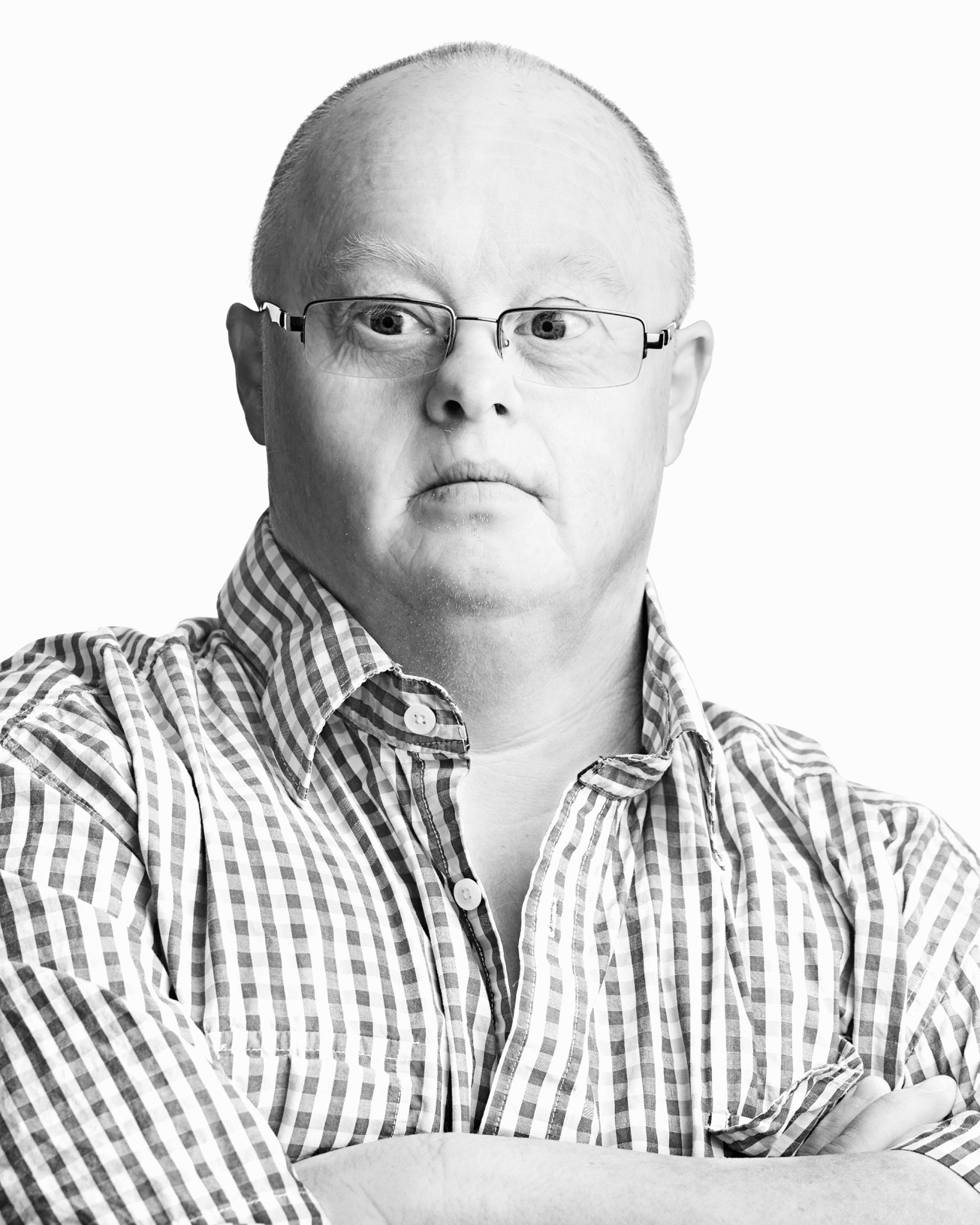
By his own admission, James is a lucky man. Employed in a production and packaging factory, James has an active social life with a large number of activities and hobbies to keep him busy – when he’s not spending time with his girlfriend, of course. James lives semi-independently in a group home that he shares with five others and is about to head off on his latest overseas adventure. In his view, life is good.
James also lives with a disability. Born with Down syndrome, a genetic condition caused by the chance occurrence of an additional chromosome within each of his cells, in addition to a range of physiological characteristics associated with the condition, James has an intellectual impairment.
Regardless, James loves life. And everything he does, he does with gusto. On a weekly basis, James swims, plays basketball, goes ballroom dancing and regularly meets his friends at the movies. He regularly travels independently to these activities and, although he often uses Melbourne’s public transport system, he owns his own transport in the form of a scooter. Of course, James also shares in the weekly household chores. He cooks meals on a regular basis, with minimal assistance from a support worker, and he attends to his rostered cleaning activities without fuss.
James is a good man, with a good heart. He loves a good laugh, is always fun to be around and he cares deeply for his family and friends. At 47 years of age, with some minor ageing-related health concerns, James may not be the media’s first choice to portray a positive example of a person living with Down syndrome however, he is a typical example of the full, and meaningful, life that is enjoyed by many people with this condition.
However, despite all the advances in education and supports for people living with disability, some question whether the Down syndrome population is at risk of becoming extinct. As reported by Down Syndrome Australia, data gathered in 2013 shows that Australia’s overall population of people with Down syndrome was approximately 13,000 or one in every 1,700 Australians. In contrast, the rate of babies born with Down syndrome in Australia was recorded as approximately one in every 1,100 which is lower than the average worldwide rate of one child in 700, due mostly to the high pregnancy termination rates in Australia.
In her 2016 documentary entitled A World Without Down Syndrome, actor and television presenter, Sally Phillips reported that, through the advances in prenatal screening processes, as many as 90% of women terminate pregnancies when they learn their child has, or is likely to have, Down syndrome. And in some countries, like Iceland, this rate has now reached 100%.
As a mother of a child with Down syndrome, Sally raises the question of value. And of choice. In particular, she asks what kind of society do we want to live in and who do we want to live in it? Are we gambling with society’s diversity? And, perhaps more importantly, what will we be screening for next?
As Sally points out, in our search for perfection, isn’t it the cracks that let the light in?
In the meantime, James is excited about his trip to Alaska and the Canadian rockies. As he always does, he will live fully in each moment of his holiday and welcome every person he meets along the way with a broad and engaging grin. He will wonder at the sights he sees and appreciate both the large and the small details of his trip. And, upon his return, he will regale his friends and family with stories of his adventures and proudly share his photographs with them all.
Is this not a life worth living?


 Contemporary portraits for everyone!